{{ title }}
★ VOTED BEST PROJECT BY THE CLASS — EK210
{{ category }}
Role: Electrical Lead · Team: 4 · Timeline: 4 months
Overview
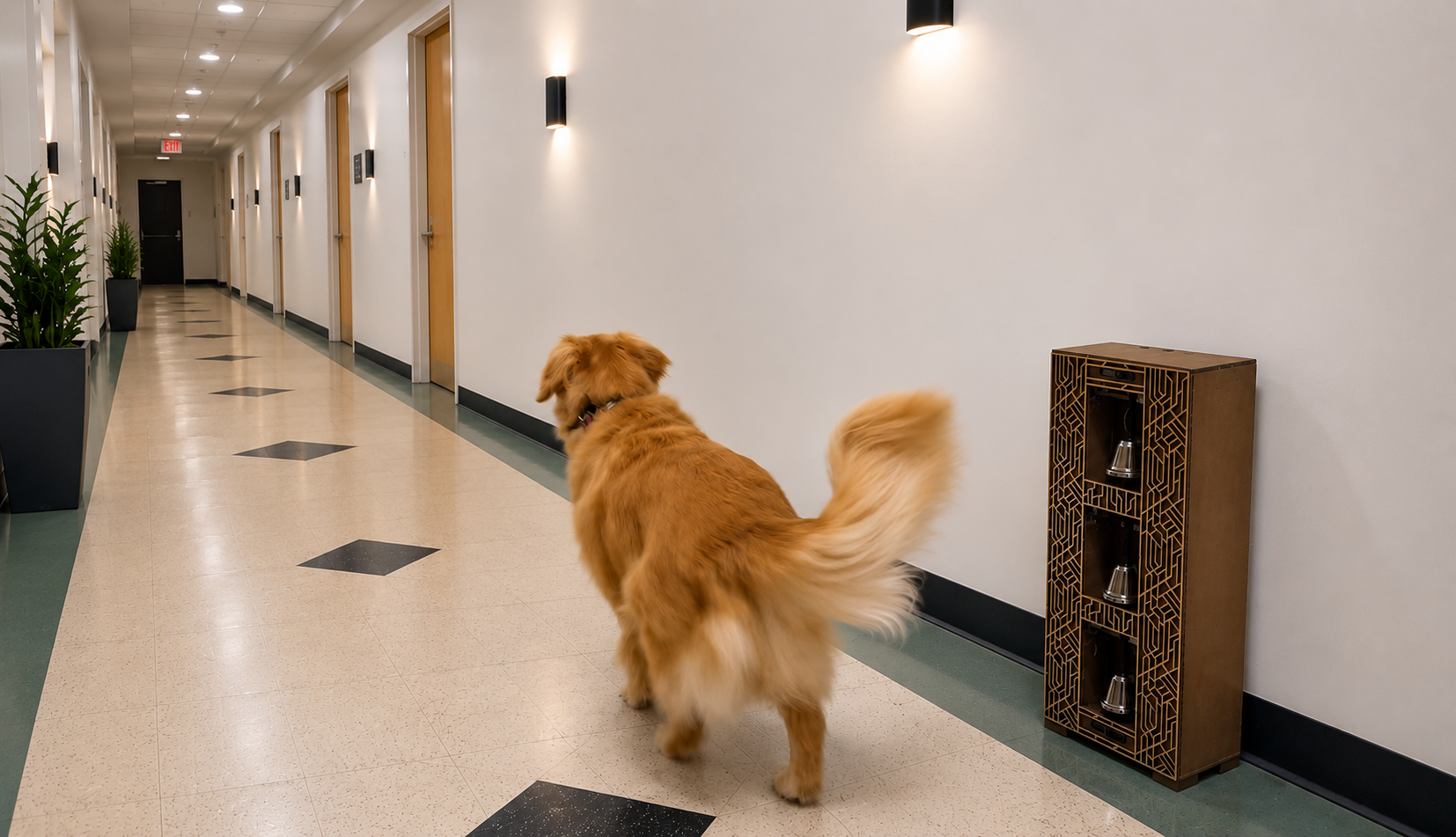
The Retro-Analog Passageway Bell was designed to offer an easy-to-use, accessible, and visually appealing way to signal movement through a passageway. The product emphasizes simple setup, requiring only a wall outlet, and was specifically tailored for users who may be visually or hearing impaired. Users can select volume levels via three color-neutral buttons, and the system employs loud, swinging dinner bells to ensure audibility. To enhance the retro aesthetic, a custom-designed wooden exterior with laser-cut decorative panels was created.
Testing confirmed that the final design met or exceeded all key objectives. The infrared sensors demonstrated a 95% success rate in detecting and correctly distinguishing between pets and humans at a standard doorway distance (~3 feet). The dinner bells, when set to their loudest volume, were clearly audible at distances up to 25 feet, ensuring that the alerts could be heard throughout typical residential spaces. User trials showed that the device could be installed and ready for operation, including volume selection, in under one minute on average, meeting the design goal of quick and easy setup.
My Role
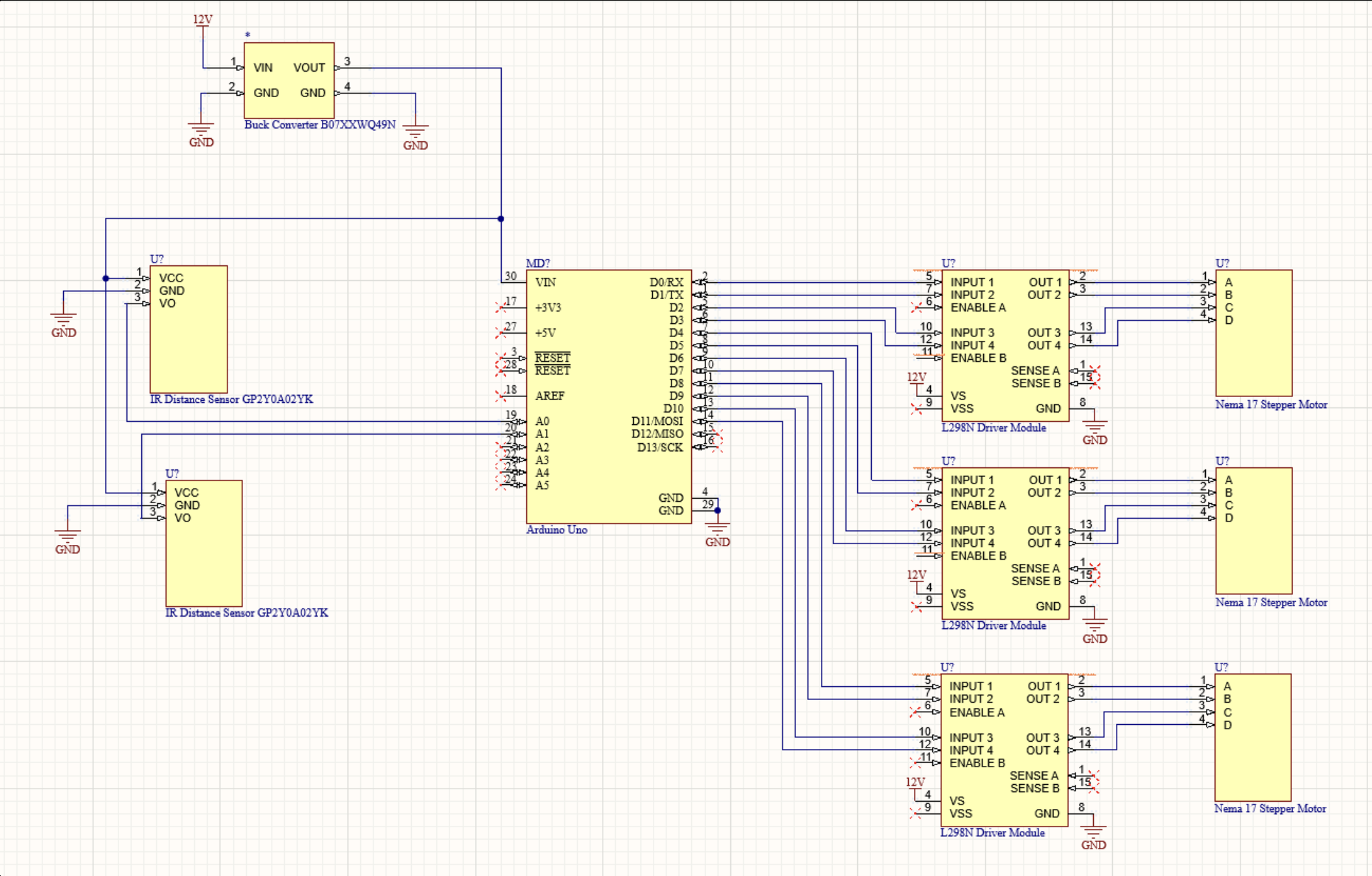
- Owned the full electrical design, including sensor selection and placement, motor driver and bell actuation circuits, the power path down to the logic rail with a buck converter, and the wiring and connector layout inside the housing.
- Wrote the C++ firmware, reading both infrared sensors, distinguishing a person from a pet by which sensor heights trip, driving the bell strike patterns, and handling the tactile volume and activation buttons with debouncing.
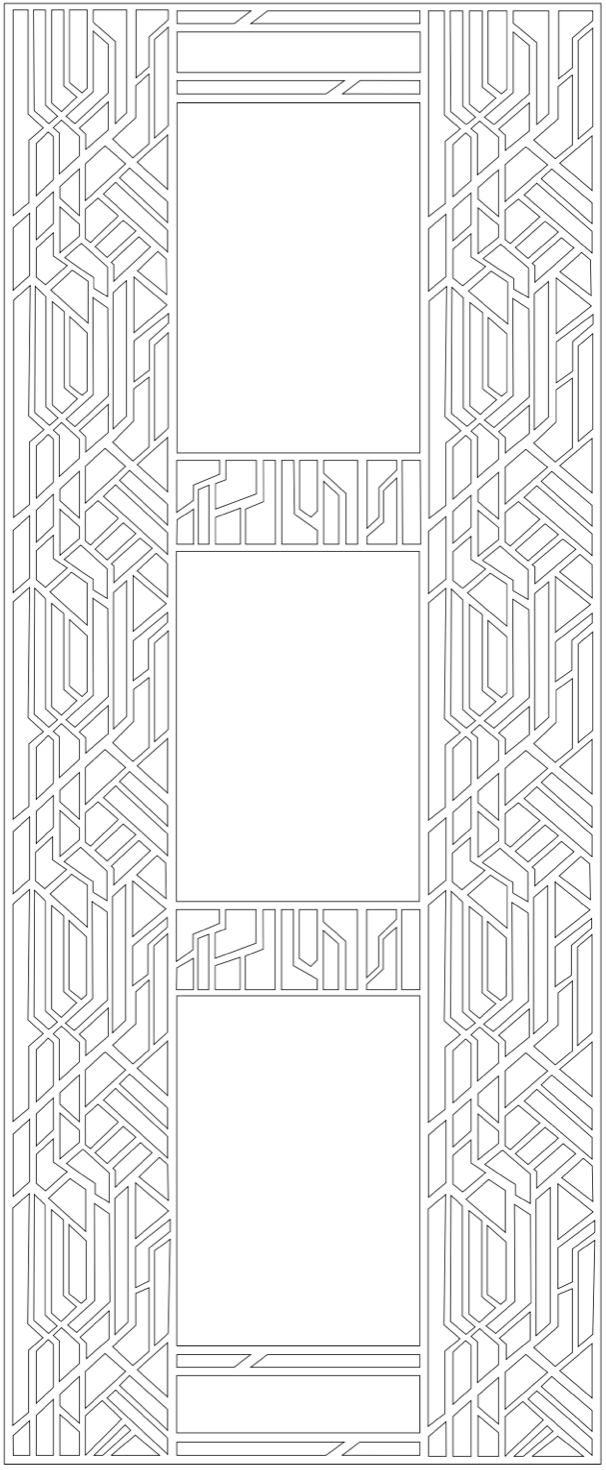
- Designed and laser cut the housing facade and its sensor openings, so the sensors have a clear line of sight through the enclosure.
Tools & Tech
The Problem
The goal of this project was to design and build a retro-style doorbell system that can detect movement through a passageway and alert occupants using a vintage, mechanical sound. The system needed to distinguish between people and pets, providing different auditory cues depending on what was detected. Unlike modern digital doorbells, the design had to embrace a traditional aesthetic and mechanical operation, offering an alternative that would not rely heavily on modern electronics or intrusive alarms. Additionally, the system needed to be sensitive enough to detect movement without startling pets or being overly disruptive in a home environment.
Metrics for Measuring Success
- At least 90% accuracy in distinguishing between pets and humans during testing.
- Bells audible at a distance of 15–20 feet without being overly startling.
- Installation time for a new user not to exceed 5 minutes.
- Aesthetically pleasing
Constraints
- Sound Level: The bells must be loud enough to alert occupants but not so loud as to disturb or frighten household pets.
- Aesthetic Requirements: The system must have a retro appearance, achieved using a wooden exterior with laser-cut designs to accentuate the vintage theme.
- User Accessibility: The device must be operable by individuals with visual impairments, using large, tactile buttons without reliance on visual cues.
- Physical Installation: The final product must be easy to install, requiring only a single power connection and no complex setup procedures.
- Mechanical Operation: Preference for mechanical motion (bells swung by stepper motors) over digital sound playback to maintain the retro feel.
Electrical & Housing Design
ELECTRICAL SYSTEM SCHEMATIC
Final Product Description
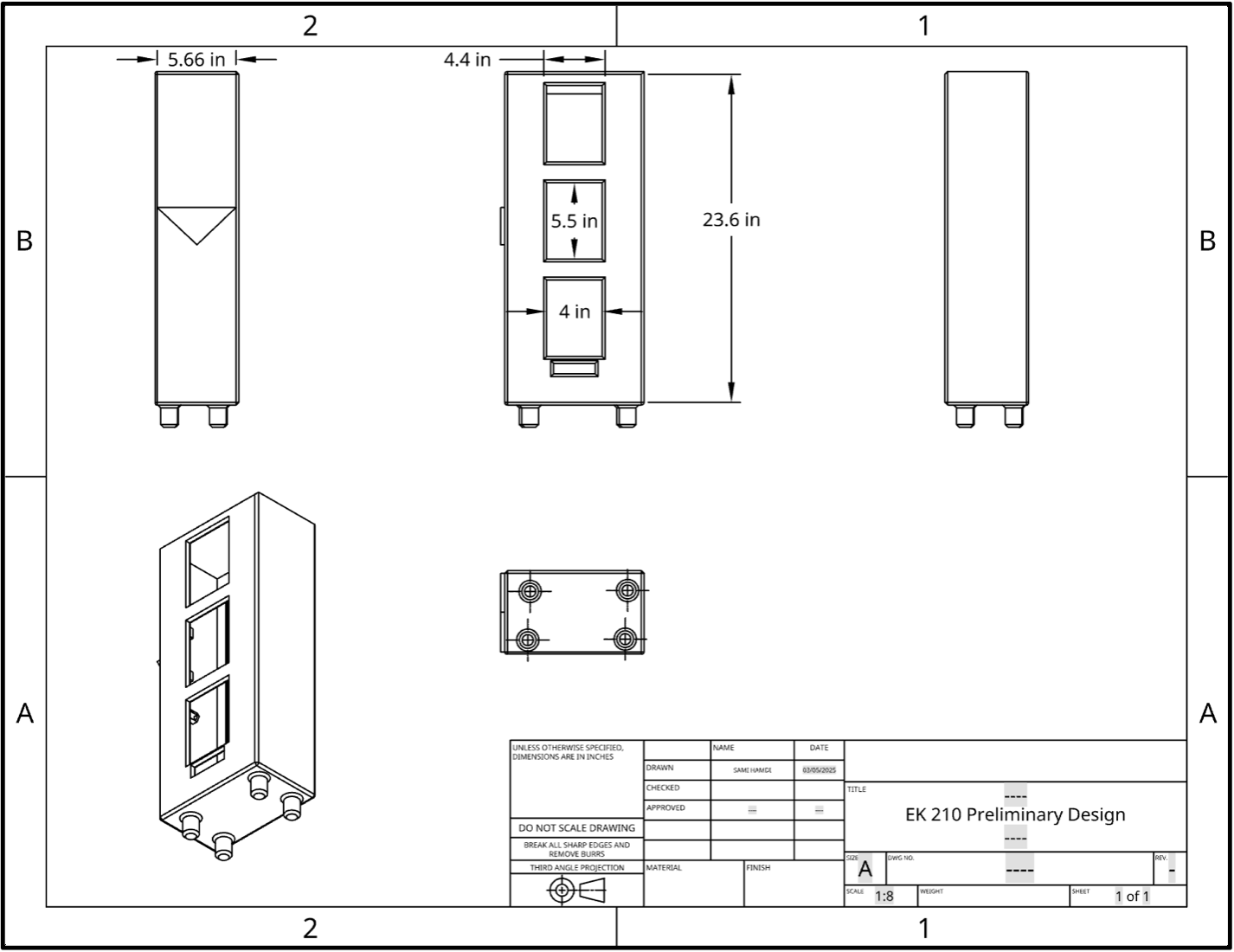
The final product is a retro-analog passageway bell system designed for ease of use, accessibility, and aesthetic appeal. Housed in a custom-built wooden enclosure featuring laser-cut decorative panels, the device captures a vintage look while offering modern functionality beneath its surface. Movement through a doorway is detected using two infrared sensors (GP2Y0A02YK) mounted at different heights to differentiate between humans and pets. Upon detection, the system activates a set of traditional dinner bells, which are mechanically swung by Nema 17 stepper motors mounted on custom 3D-printed brackets.
The device rings a single bell when a pet is detected (only the lower sensor triggers) and all three bells when a human is detected (both sensors trigger). Users can easily adjust the volume level using one of three large, color-neutral, tactile buttons, ensuring accessibility for visually impaired users. The entire system is powered through a standard wall outlet, with no additional setup beyond plugging it in and selecting a preferred volume setting. Overall, the device offers a simple, intuitive, and charming method to monitor passageway traffic without relying on modern digital alarms.
Mechanically, the bells are swung by stepper motors mounted on custom 3D-printed brackets. An Arduino microcontroller coordinates input from two infrared sensors, which detect movement at two different heights to distinguish between pets and humans. If only the lower sensor triggers, the system identifies a pet and rings a single bell; if both sensors trigger, all three bells sound to signal a human presence. Testing demonstrated that the sensors performed reliably over typical doorway distances (~3 feet) and the stepper motors delivered precise, consistent motion, confirming the design’s effectiveness.
Lessons Learned
Most of the issues our group encountered were related to hardware, for instance a hardware-related issue we encountered was choosing motors that would not be powerful enough. The initial motors our group chose for the preliminary design seemed to have enough torque on paper, but after testing, we realized that it would be inadequate. Another problem that slowed down our design process was having faulty drivers for our sensors. When we ordered our stepper motors, we also ordered the driver modules that were supposed to be compatible. However, the motors were not functioning with those drivers and only started working when we used a different driver module.
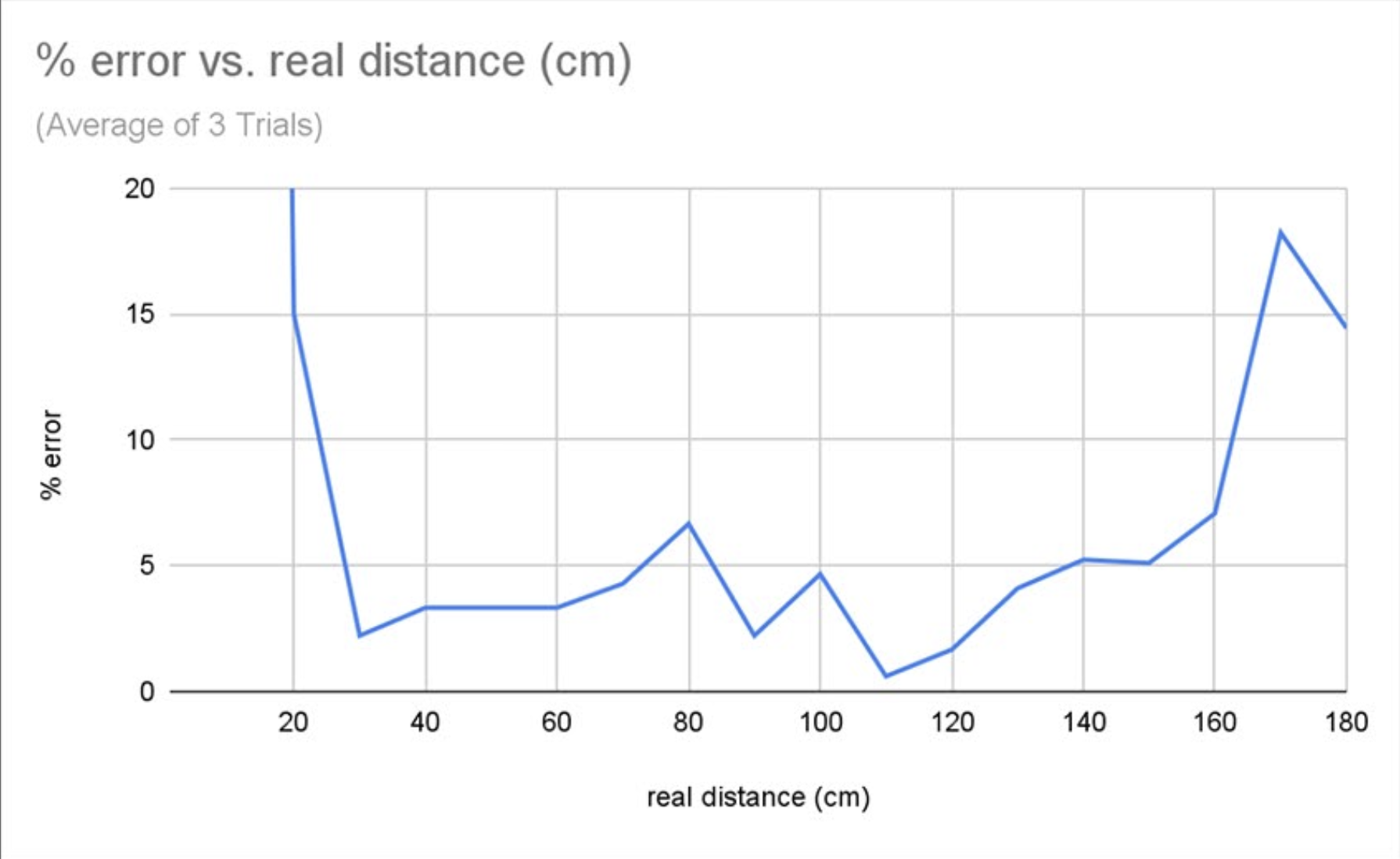
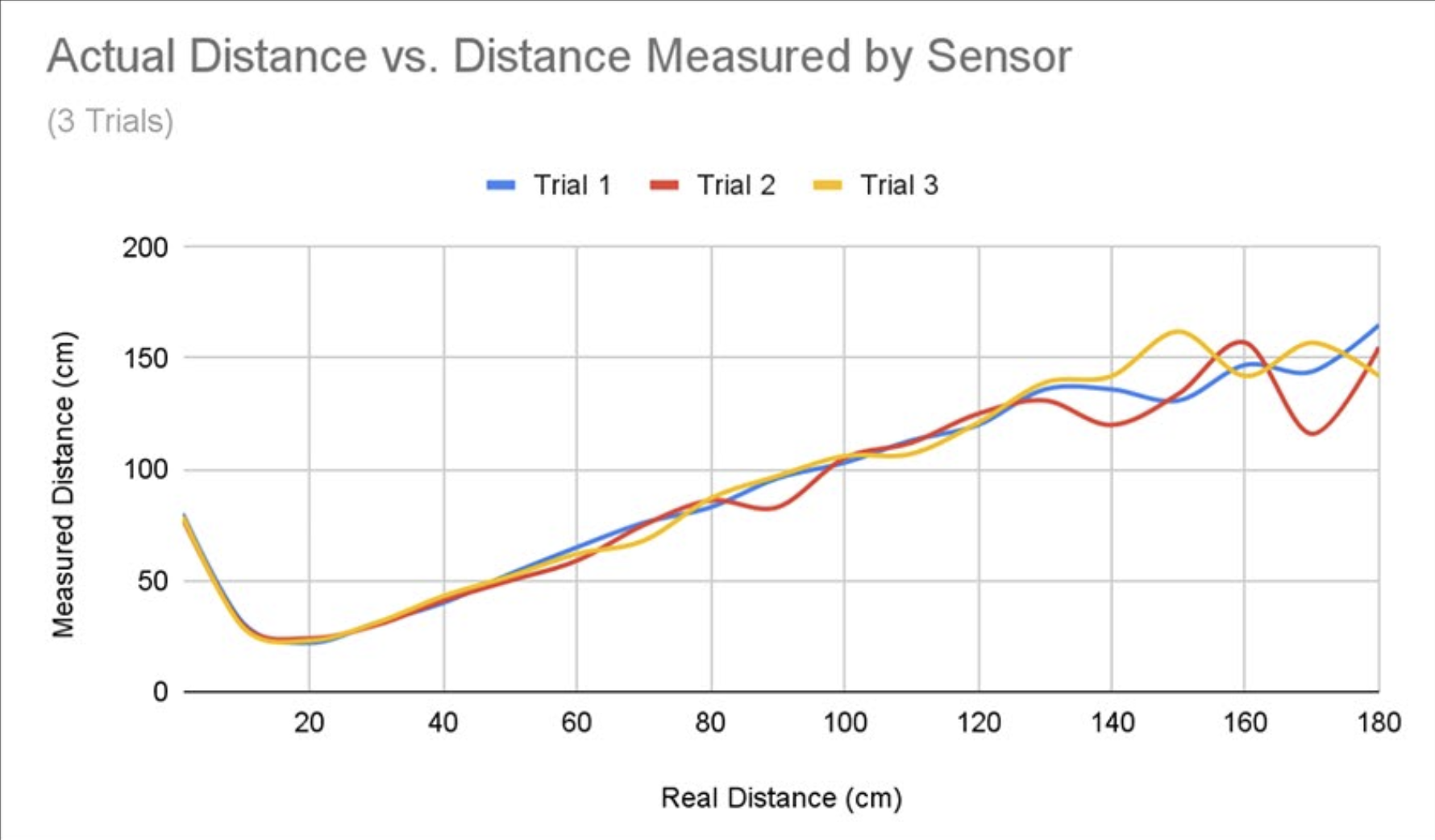
One more large issue we ran into was not correctly accounting for the amount of power needed for the motors. After the first draft of the product was complete, we realized that the motors were not moving. After some troubleshooting, we realized that the motors were moving for a split second, then stopping, since our power supply did not have enough current for all 3 at once. Finally, we also wanted to incorporate secondary sensors, but realized that these would not be necessary, since humans take up a large proportion of the doorway, and our current sensors, which don’t work within the first 20cm range, work just fine with an error rate of 5% or less. In general, the biggest lesson that our group learned is to be very careful when picking hardware, every single detail matters and needs to be correct for parts to be compatible.
Back to All Projects